
In the previous part of the interview, we followed Toomas Hendrik Ilves from his youth in the US to his work as a journalist in Munich, until he agreed to become Estonian ambassador to the US and to help rebuild his country from the ashes of Communism.
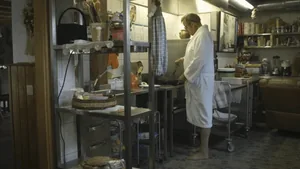
In 1991, Ilves prepared the documents and moved out of Munich towards Tallinn and later Washington. ”The procedure to renounce your American citizenship is quite interesting: you sign a paper stating that you want to do it, then you have to leave and come back a few hours later and sign it again, so they can certify that you took this decision in a sane state of mind”.
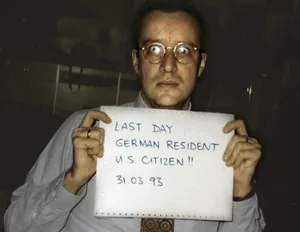
Moving to Estonia at the beginning of the Nineties was definitely not for the faint-hearted: “The country was so poor that the embassy itself didn’t have money, sometimes we didn’t even get paid at all. Somehow, I was expecting Estonia would become a liberal democracy instantly. Then I realized it would have taken a long time to get there.”
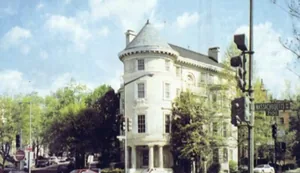
His main task as ambassador was a thorny one: “We still had about 40,000 Russian soldiers on our territory and they were supposed to leave. I had to make sure that the United States would stay behind the troop withdrawals. Besides that, as I mentioned previously, I was also busy building our new embassy in Washington.”
We still had about 40,000 Russian soldiers on our territory and they were supposed to leave. I had to make sure that the United States would stay behind the troop withdrawals
The reborn Baltic countries had to pick their alliances wisely: “NATO, NATO, NATO. We all wanted into NATO, that’s the only thing people cared about back then. The Baltic attitude towards the EU was dubious: ’It feels like a socialist thing, we’ll join someday’. I soon realized that we would never get into NATO unless we entered the European Union first; because once you are in the EU, Germany, France, Italy, the UK, who were all against our membership in NATO, could not veto us anymore.”
A difficult task for a country that just reintroduced its own currency, the kroon. ”We did that against the advice of the International Monetary Fund, as often happens when you need to approve reforms. Later they accommodated our decision and became an important technical and financial partner. Still, in 1994 our country had nothing and we had to find a way to bring it back to its feet.”
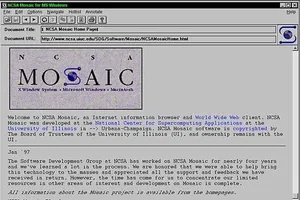
The serendipity moment came in 1994: through a friend and professor at the University of Illinois Urbana-Champaign, Ilves learned that a graduate student named Marc Andreessen invented NCSA Mosaic, the first graphical web browser. ”I went to buy it in Radio Shack: a big box, seven floppy disks, priced at $29.95. I uploaded it to my computer and immediately understood the strategic possibility of the internet, now that web browsers were a reality: it was the only thing in which little, poor Estonia was on the same level as Germany or the United States. Roads sucked, buildings, sucked, everything sucked; we could have never caught up on any of these aspects but with something completely new, there we were competing as peers. If you want to change society, you have to start with young people, ’Go to the youth, gentlemen!’, to say it with Lenin. I learned to code when I was 16, old people were not going to go for it. And young people learn quickly, that is also important when you want to create something new.”
Everybody mentions Ilves as the originator of the Tiigrihüpe (Tiger Leap), the programme for digitalising Estonia, but nobody clearly explains in which form he contributed: private letters, phone calls, public debate? ”Well, there were many calls and letters for sure, but the core of the programme was developed after I gave a speech at the Tallinn Technical University; I talked about my idea of developing a digital nation and making young people learn how to use a computer. And in the audience, there was the minister of education, Jaak Aaviksoo, who had a PhD in physics, so he was also a techie. He came up to me and told me: ’Let’s get together and talk about this’. That night we were three: him, me and Johnnie Walker. We sat there until morning drinking whiskey and figuring out how to put a computer in every school and connect them to the internet.”
That night we were three: him, me and Johnnie Walker. We sat there until morning drinking whiskey and figuring out how to put a computer in every school and connect them to the internet.
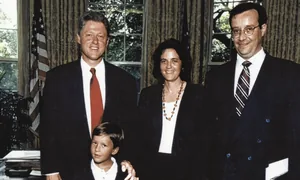
This task was complex because of the way the education system is organised: “What the minister did was to push this idea through the government, politically, with the support of the president. In Estonia every municipality has its own education budget, so they would have to put half of the money and then the government would put the other half. A computer for half price is not bad, but they had to make a request. Envy helped a lot: when a municipality saw that their neighbour got computers, they wanted one too. By the end of 1998 all Estonian schools had computer labs and they were online.”
As it often happens with revolutionary ideas, there was significant opposition: “The weekly newspaper of the teachers’ union was attacking me continuously: they were saying my idea was stupid and that it would destroy Estonian culture. They were afraid everybody would start speaking English because of computers, but the truth is they didn’t want to learn anything new. If you are a 55-year-old teacher and your children in your class all know how to do something you don’t even understand it can be annoying.”
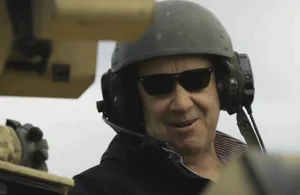
In November 1996, following a government crisis, Ilves was asked to become minister of foreign affairs, replacing Siim Kallas. ”I said to Meri: ’I will join but one condition: we have to change our orientation and focus on the EU before NATO’. And I had to convince him too.”
There was a lot of work to be done: “When I met the civil servants of the ministry, I discovered that we already had a European Integration Bureau. It consisted solely of a twenty-five-year-old girl, Kyllike, who is now leading the Estonian Permanent Representation. I told her: ’We are going to change everything; we need to open embassies in every EU country now.’ I had to redo the budget because there was no plan for new embassies. We also redid the whole questionnaire for the Commission; we ended up with 1,500 pages from the 80 we had initially.”
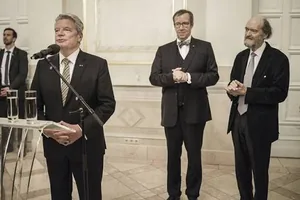
Ilves works tirelessly, visiting all the foreign ministers of the European Union, speaking at as many conferences and think tanks as possible, defending the idea of having Estonia in the EU, using all the diplomatic tricks he could think of. ”There was no proper Commissioner for Enlargement back then, but the official responsible for it was called Graham Avery and, before his assessment visit to Estonia, I found out he was a great fan of the Estonian composer Arvo Pärt. So, I called Tõnu Kaljuste, our greatest choral conductor and a good friend of mine, and I asked him to organise a quick concert for Avery, something simple like a choral practice. And when the Grammy-winning conductor with the Grammy-winning chorus sang Arvo Pärt, Avery had tears rolling down his eyes. After ten minutes he told me: ’You *** son of a ***’, because he knew what I did was a major manipulation. Later I found out that when he saw the programme mentioning a concert he shouted: ’No, not another f***g folk dance group!’”
The German chancellor was afraid that letting us in the EU would have made Russia angry
Ilves might have persuaded the Commission but not the member states. COREPER had to decide which countries would be invited to join the EU, Hungary, the Czech Republic and Poland for sure, but would they invite Estonia too? ”Chancellor Kohl was completely against it; fortunately, the perm rep ambassador, Dietrich von Kyaw, was persuaded that Estonia met all the criteria and he voted in favor. Later I found out that he switched off his phone so he could not be reached by Kohl before the vote. The German chancellor was afraid that letting us in would have made Russia angry.”
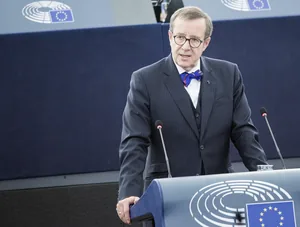
History didn’t teach us anything… Estonia was the quickest Eastern Bloc country to enter the EU, eight years and five months from the formal application. ”We could have been quicker than that, what happened was that Günter Verheugen, the first commissioner for enlargement, didn’t want to decide which of the six could enter or not. So, they postponed it by two years and let the ten new member states join in 2004.”
Ilves has no doubts about what made Estonia different, in terms of low corruption and respect of the rule of law, from, say, Hungary, Slovakia or Czechia: “We always had Finland to compare us with: they are linguistically and culturally close, they have a clean, well-functioning society and they have always been an example to follow. We wanted to be at least as good as them.”
We always had Finland to compare us with: they are linguistically and culturally close, they have a clean, well-functioning society. We wanted to be at least as good as them.
In 2004, Ilves became MEP with the Estonian Social Democratic Party, receiving more than 70K votes, managing to explain to the voters that social-democrats are not communists. ”That was not easy at all. Still, our party was centre-left only in Estonian scale; in European scale it is probably centre-right. We were centrist, supporting a proportional income tax. People liked me for two reasons: I made Estonia digital and I brought it into the EU.”
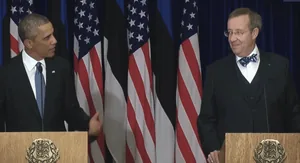
His time in Brussels made him even more pro-European: “In Brussels you can get things done, I never believed the bullshit about its inefficiency. You have to play by the rules, but also take initiative. For example, I was persuaded that we needed an EU regional policy for the Baltic Sea, which after the enlargement had become a European lake, with a little bit of Kaliningrad and Saint Petersburg here and there. So, we created the Baltic intergroup, a self-started group not defined by law, which produced the first regional policy. Even if the Parliament does not have the right of initiative, together with Alex Stubb we presented our report to Barroso and it was quickly adopted by the Commission.”
In Brussels you can get things done, I never believed the bullshit about its inefficiency
In August 2006, Ilves was working hard in Brussels when the Social Democrats, the Liberals, the Reform party and the Conservatives asked him to run for president of Estonia. ”They checked the polls and found out that I was the only person as popular as Arnold Rüütel, the incumbent president. But they had to convince me, I didn’t want to do it, because you can’t do much as a non-executive president. They told me: ’Don’t worry, you will not win, it’s just a way to present a strong name and show unity to the voters.’ In fact, I didn’t reach the two-thirds majority required to be elected in the first three rounds.”
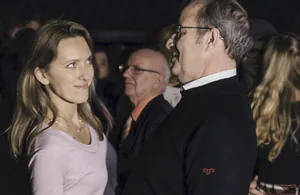
In the fourth round, besides the members of the parliament, also the representatives of local government councils are allowed to vote and a simple majority would suffice. ”A group of eighty Estonian cultural figures signed a letter to support my bid for president and that’s when my coalition started thinking I could have made it. In the end I got 174 votes, just one vote above the threshold.” A completely different story from Ilves second election in 2011. ”I was still not persuaded to run but the other candidate, Indrek Tarand, was such a nasty piece of work that I said: ’Ok, let’s do this again’. Fortunately, he wasn’t a very strong opponent, and I became the first candidate to be elected in the first round since Estonia regained independence.”
Well, I have been a crazy president and I think some people liked me for that
“You must have done a terrific job in your first mandate!”. Ilves dismisses this statement with a grunt, in a perfect display of the Rule of Jante, a social attitude of disapproval towards expressions of personal success typical of the Nordic countries. I have to insist a bit: “Well, I have been a crazy president and I think some people liked me for that. I focused a lot on foreign and security policy, because I was convinced that the people officially in charge of that were not really good at it. Inspired by the book Making Democracy Work by Robert Putnam, I also tried to develop Estonian civil society, supporting NGOs and neighbourhood associations. We had to overcome that Soviet mentality for which the government and the people are separated. Because only strong traditions of civic engagement can create a successful state. And I also tried to support music; I get along with the musicians here.”
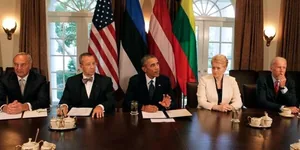
Ilves met many people all over Estonia, some of them particularly interesting: “I went to see this neighbourhood association, a group of hipsters basically, located in the Uus Maailm district of Tallinn; a filmmaker, Jaan Tootsten, just shot a movie about their local initiatives. I talked to him and I realized he was very knowledgeable about the modern aspects of culture, videography, social media. I decided to hire him as cultural advisor. Later he asked if I would agree to let him record my day-to-day life. Since I was not planning to run for office ever again, I said, why not?”
This material was later used for Rebel with a Bowtie (2024), a documentary about his presidency, which also inspired an opera: after the American economist Paul Krugman questioned Estonia’s austerity success story, Ilves fired back on Twitter with such passionate indignation that the exchange was later transformed into Nostra Culpa, a short ”financial opera” performed in Tallinn.
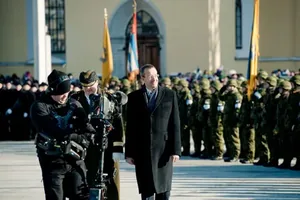
Ilves also managed to introduce a new holiday: “Estonians did not celebrate the 20th of August, which is the re-establishment of independence, mainly because of prime minister Edgar Savisaar, who was very populist and left-wing. Already at the beginning of the Nineties, I told Meri that we had to celebrate that day and he told me: ’No, that’s Edgar’s day, the only Independence Day we have is 24 of February.’ But this was a missed chance of unity, because most people, including children, remembered when Estonia regained its independence. So, in 2007, I decided to organise a series of events and I invited the cultural elite, which has been at the forefront of the independence movement, to join. Since then, the holiday is celebrated all over the country, no longer as a holiday for just one party.”
The cyberattack against Estonia showed me how little the other EU countries shared our concerns about Russia. Only the US and the UK believed us.
Showing unity was important, considering that just a few months before, in April 2007, Estonia had been the victim of serious cyberattacks orchestrated by Russia as a punishment for relocating the Soviet monument the Bronze Soldier of Tallinn from the city centre to the Tallinn Military Cemetery on the outskirts: “The attack showed me how little the other EU countries shared our concerns about Russia. Only the US and the UK believed us, because they have NSA and GCHQ and they were immediately here to try to understand what happened. They knew there was the possibility of targeting an entire nation with cyberattacks but it had never happened in reality.”
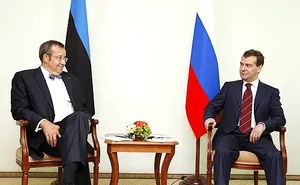
It’s not always good to be the first ones. Russia kept showing signs of being a problem for European security: in 2008, after months of Russian provocations from South Ossetia, Georgia tried to seize the city of Tskhinvali, triggering the Russian invasion. ”After the NATO summit in Bucharest, in August 2008 Misha (Mikheil Saakashvili, ed) called me and said: ’I’m going in’. I told him: ’Don’t do that!’. ”Condoleezza Rice said I can.’, ’I don’t think she did’, I replied”.
The Russians attacked on August 8. ”I was contacted by the president of Poland, Lech Kaczyński. He apparently thought I was the only Eastern European president who wasn’t a commie, because of my past at Radio Free Europe. We decided to publish a statement to condemn the invasion but there was no reaction from the West. He called me the day after and told me: ’What do we do?’ and I said, as a joke: ’Well, we could always fly there’. And he replied: ’I pick you up tomorrow morning’. So, the morning after he sent a diplomatic plane to Tallinn where I was joined by Ivars Godmanis, the Latvian prime minister, as the Latvian president was attending the Olympics in China. We flew to Warsaw and were joined by president Kacynski and Lithuanian president Valdas Adamkus.”
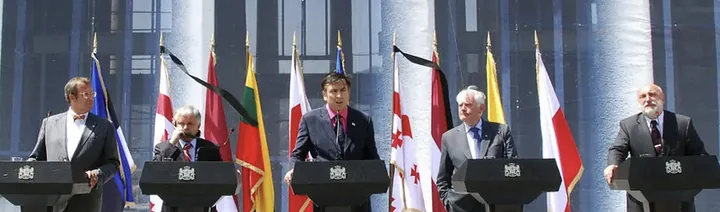
Landing in Georgia was not easy: “They let Sarkozy land but when we asked for permission, the Russians did not reply. So, there was a big fight on the plane, because the captain didn’t want to fly in without Russian permission but the Polish president wanted to. In the end, we landed in Ganja, Azerbaijan. President Ilham Aliyev sent some beautiful Mercedes and they drove us up until the Georgian border. There we were collected by the Georgians and we drove down the Caucasus slopes in a horrible Mercedes G series military jeep, which was probably 35 years old and without shock absorbers. I kept hitting my head against the roof and the Latvian PM told me (with Russian accent): ’You were not in Soviet Army? Put your hand on head!’. That trick helped a lot.”
We drove down the Caucasus slopes in a horrible military jeep. I kept hitting my head against the roof and the Latvian PM told me: ’You were not in Soviet Army? Put your hand on head!’
In the end the convoy reached Tbilisi: “Kaczyński asked to see Sarkozy, who was negotiating the ceasefire, and he replied: ’I will meet with you, but not with the little ones’. Still, with the other former Eastern Bloc presidents we managed to show our solidarity when we addressed a rally in Tbilisi that same day. And this is important for a country that is the victim of aggression. A few months ago, I met a Georgian student from Tartu University and he told me he perfectly remembered that day, he was eight years old and he went there with his family. ’Seeing all these countries sending their presidents to support us was one of the most important moments of my life’, he said.”
In Estonia people were also showing their support for Georgia. ”The streets were full of Georgian flags; there was a big demonstration at Lauluväljak. We were protesting and the Finns were doing nothing. Their president (Tarja Halonen, ed) even dared to say that Estonians were protesting because they were still ’suffering from post-Soviet traumatic stress syndrome’. This was the final proof of a significant fracture between Eastern and Western Europe. Time showed we were absolutely right in our assessment of Russia.”
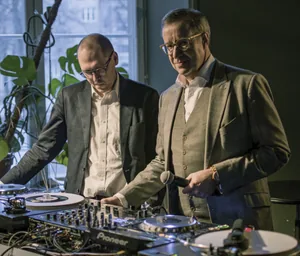
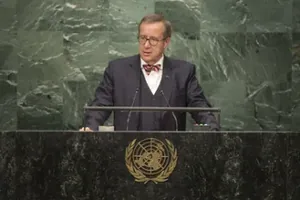
In 2009, in the attempt to address that fracture and give a European response to international crisis, the EU created the position of the High Representative of the Union for Foreign Affairs and Security Policy and Vice-President of the European Commission. ”Everyone wanted the EU to be like a country, but none of the big countries’ prime ministers or chancellors wanted to give up that role. Sarkozy, Merkel, Macron they all wanted to be the leaders, the saviors. So, they kept picking non-entities for that role: First they chose Baroness Ashton of Upholland (2009), who had been the treasurer for the Campaign for Nuclear Disarmament, which turned out to be funded by the KGB. Then Federica Mogherini (2014), who went frequently to Moscow often but only twice to Ukraine – and this after the Russians had invaded and occupied Crimea, the worst violation of the UN’s prohibition of changing borders using force. She was utterly incompetent and, apparently given her recent arrest, allegedly corrupt. And Borrell (2019) who hated the US but was not a foreign policy person.”
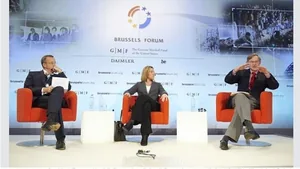
And then Kaja Kallas, in 2024. ”She is the only EU politician who gives me hope. She is incredibly smart and she does have real expertise in foreign policy. And that’s why people are pissed off with her, because she is not irrelevant. They criticize her for talking often about Russia but I wonder, is there any other war happening on our borders?”
Estonia recently appointed Kristjan Prikk new ambassador to NATO. Is Estonia going to change its naïve beliefs about Trump’s America? ”We do not have a naïve belief anymore, it’s just that people are very careful, every country bordering Russia is careful. We are not stupid, we know exactly what’s going on but we can’t be Meloni, because Russia will never attack Italy.”
Kaja Kallas is the only EU politician who gives me hope. She is incredibly smart and she does have real expertise in foreign policy
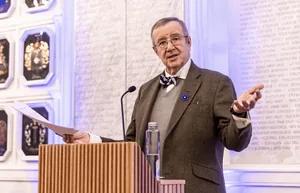
Probably they don’t need to, former Italian prime minister Giuseppi Conte invited Russian troops on Italian soil during Covid. ”One of the dumbest decisions I’ve seen in a long time. Anyways, Italy and Spain they will not raise their defense spending because Russia will not attack them. But Russia could easily attack our countries. We are aware that Trump is who he is, but we are not going into a fight with him, because we are too vulnerable.”
The clock is ticking and there is time for a final question: “What mistakes did the EU make over the past few years and how can we solve them?”
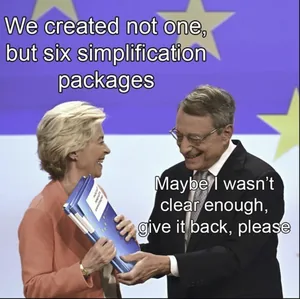
“Europe made a double mistake: it neglected security and failed to keep up in innovation and technology. In the name of narrow national interests, we have put off for years the reforms that have been obvious to every thinking person. Now, with Russia attacking, China rising, and the US becoming unreliable or even hostile, Europe is truly exposed. The Pax Americana, in which the United States guaranteed European security, prosperity, and the wider liberal rules-based system, is over. We need a European grand strategy: massive investment in defense, technology, AI, capital markets, industrial policy, and governance reform. We need to implement Mario Draghi’s competitiveness agenda, including common debt, qualified majority voting, and EU-level investment.”
Europe made a double mistake: it neglected security and failed to keep up in innovation and technology
Will Europe manage to implement such a grand vision? We’ll find out in the coming years, in the worst-case scenario we can still make memes about it.
A huge thank you to M. and Krista for helping organize the meeting; to Anna for the caring proof-reading; and to all the photographers I stole the pictures from, I hope you’re fine with that, otherwise let me know, I can also add credits or remove the pictures, in case.
Thank you for the education