
This is a long reportage about Georgia and its deeply concerning situation, it mixes personal memories with interviews of political leaders. You can read it in chapters, or just skip to the one you’re interested in.
1. Georgia on my mind
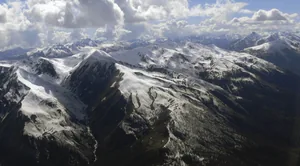
I visited Georgia for the first time in 2016, in a memorable two weeks Caucasus trip, and I was truly impressed by its beautiful mix of majestic mountain peaks, medieval towers, orthodox churches and modern buildings. Georgia lies at the crossroads of Asia and Europe, and its culture displays traits associated with both: hospitality is highly ritualized, with banquets and toasts; just like in Central Asia, people traditionally trace their ancestry back seven generations before proceeding with marriage; elders enjoy a great respect and families are often involved in their children’s personal lives.
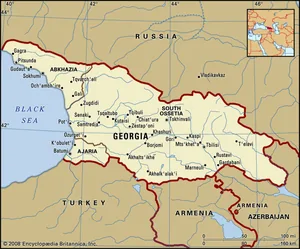
At the same time, the country has a very old Christian identity and a strong political and intellectual orientation toward Europe. Due to its strategic location, Georgia has been invaded many times, and one can still hear the echo of the past battles in the most common Georgian greeting: გამარჯობა (gamarjoba), which roughly translates to ’Victory to you’.
“Without Georgia, Europe would be ruled by Mongols”, told me Tengiz, the father of my friend Sesil, during a memorable dinner in which I discovered all the possible variations of khachapuri. While Georgians never defeated the Mongols in a battle, and were subordinated to Ilkhanate for about a century, King George V ’the Brilliant’ gradually restored royal control over Georgian nobles, reuniting much of the kingdom. ”Maybe it wasn’t the Georgians who stopped the invaders but their superb wine”, I think, while I sip some sweet Akhasheni admiring the beautiful hills around Kutaisi.
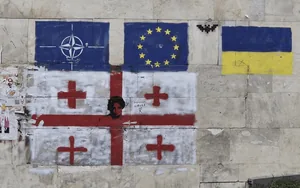
In any case, Georgians have no doubts that they do belong to Europe: speeding through Tbilisi traffic, I remember noticing that while not every official building flew the Georgian flag, they all seemed to fly the European one. And the people, from Batumi to Tbilisi, were discussing cheerfully their future in the EU, especially the long-awaited visa liberalization.
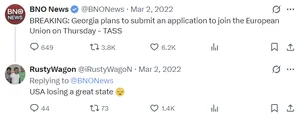
That’s why I was surprised, in the last years, to see the country drifting away from its accession path: in 2021 the government didn’t push through the needed electoral and judicial reforms, in 2023 it didn’t reduce the oligarchs’ influence and in 2024 it adopted the infamous ”foreign influence” law and further restrictions on political and civic activity. Finally, the Georgian Dream-led government postponed EU accession negotiations until 2028, seriously damaging the relation with the EU and its own citizens.
Sure, Georgian Dream has substantial business ties with Russia, a GD-appointed prosecutor-general was linked to the FSB, its policies often benefit Moscow, and its founder made his fortune in Russia; yet it would be far-fetched to suggest that the Kremlin controls it.
As ten years is a lot of time not to see your friends, and as I was curious to understand what happened to the country, I decided to pay Georgia a short visit. Playing the DG MEME card, I was also able to get in touch with some leaders of the opposition and even with some people working for the government.
2. Nino Evgenidze
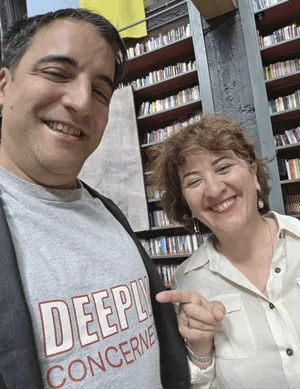
My first point of contact is the explosive Nino Evgenidze, a very outspoken Georgian economist, policy expert and civil-society leader who serves as executive director of the Economic Policy Research Center. Her vitality and determination are almost contagious: “I come from generations of patriots who fought against Russian influence in Georgia, first as an empire, then as the Soviet Union and now as the Russian Federation. The government often tries to intimidate me and make me shut up, but in my family we are used to such methods.”
Nino previously worked in Georgia’s presidential administration and anti-corruption structures and hosted an economic programme at Radio Free Europe/Radio Liberty. She holds degrees from various institutions, including the London School of Economics, Maastricht University, Vienna University and Tbilisi State University.
It is hard not to ask what keeps her in Georgia when she could easily enjoy a comfortable position somewhere else in Europe or in the US. “I love my country and I think Georgia made enormous progress in the past years. I will do whatever I can to oppose a regime that wants to bring us back fifty years.”
Asked what the EU should do to help Georgia, she replies vigorously: “They have to sanction our oligarchs, especially Bidzina Ivanishvili and his business enablers! Their children study in the best schools in Europe, they go shopping in Europe and they launder their money there. The US and the UK are already doing that; the EU should do the same.”
The EU has to sanction our oligarchs! Their children study in the best schools in Europe, they go shopping in Europe and they launder their money there.
3. Tinatin ”Tina” Bokuchava
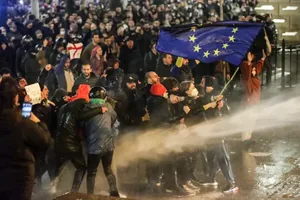
Thanks to Nino’s contacts, I get in touch with various figures in the Georgian opposition. The highest-ranking politician I meet is MP Tinatin ”Tina” Bokuchava, who was then chair of the United National Movement (UNM). Technically, she is a former MP: despite being elected, she refused to recognize the results of the fraudulent 2024 parliamentary election and she boycotted the new Parliament. In the hope of triggering a new election, 49 opposition MPs, including Bokuchava, requested the Parliament to have their mandate terminated. The request was accepted on 5 February 2025, leaving the Georgian Dream government operating a parliament without a significant opposition.
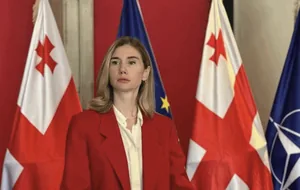
Despite of this, Bokuchava wants a Georgia that is an irreversibly European, democratic state anchored in the EU and NATO and protected from renewed Russian domination. Her beliefs and faith in the Rule of Law come from her many experiences abroad, the first of which happened when she was just twelve: “In 1995, winter was the hardest period in Georgia, there was no heating, electricity was scarce and in school we had to write tests with gloves on. So my parents decided to send me for three months to a family they knew in Cologne.”
Bokuchava’s family was culturally significant in Georgia and with a few contacts abroad: “My grandfather was the editor-in-chief of Literaturuli Sakartvelo (Literary Georgia), one of Georgia’s leading literary newspapers during the Soviet period. My Father had a master in economy and one in engineering, my mother had a PhD in microbiology. But at the time the monthly salary was around 20$, so they had to borrow money to buy me a plane ticket. Looking back at it, now that I am a mother of three children, I understand that my parents must have been quite desperate to let me go alone. On my way back, I brought a couple of boxes of chalk for my math teacher, the biggest gift a teacher could receive at the time.”
The experience in Germany was very positive. “Studying abroad gave me the opportunity to do something with my life: in Georgia there was darkness, in the literal and figurative sense; everybody who was not stealing money was struggling. Even the education system was completely permeated by corruption, high school teachers would ask for bribes, not to mention universities.”
In the Nineties, in Georgia there was darkness, in the literal and figurative sense; everybody who was not stealing money was struggling.
So Bokuchava managed to leave again. “In 1998, I was hosted by another family in the United States, I did two years of high school there. I applied to college, I got financial aid and that’s how I was allowed to stay. Then I came back to Georgia for a while, I spent a year in Switzerland studying and then I went back to US for graduate school.”
After receiving a Master of Arts in Law and Diplomacy in 2008, Bokuchava starts working at the National Democratic Institute and then for the Georgian minister of foreign affairs at their representation in Geneva. “I worked on international law, on the negotiation to let Russia enter the World Trade Organization. Georgia had veto power, as the WTO is a consensus based organization, but as part of the big reset, in the end we let them in.”
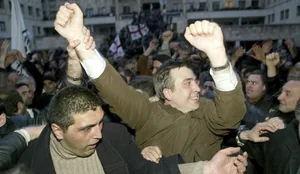
Thanks to her work, Bokuchava makes her name in the ministry of foreign affairs. Meanwhile, Georgia is overcoming its Soviet days thanks to Mikheil ”Misha” Saakashvili, one of the most polarizing figures in modern Georgian society; in power since 2003 with his party UNM, he managed to modernize Georgia, breaking much of the petty corruption, rebuilding state institutions and infrastructure, and pushing Georgia decisively toward NATO and the EU. As it often happens, his efficient rule became increasingly authoritarian and abusive: concentration of power, pressure on media and opponents and police violence were not uncommon.
In 2012 Bokuchava came back to Georgia, just before Saakashvili lost his popularity (and the elections) over a prison-abuse scandal. “I was appointed deputy chair of the state audit office, which oversees political financing. It was a very difficult position because Ivanishvili (the richest man in Georgia, the main opponent of Saakashvili and founder of Georgian Dream, ed) was spending obscene amounts of black money to prepare for the elections. The atmosphere was very hostile towards UNM in those days, I remember in 2013, during a speech at the National Library, we were physically attacked by a group of thugs who had recently been released as political prisoners.”
Even today, the atmosphere seems quite hostile in Georgian politics. “The difference is that back then the hostility was only aimed at UNM. Over the years it expanded to include everyone who doesn’t serve Georgian Dream’s interests, including NGOs, journalists, teachers and regular citizens who dare to protest.”
Despite of the continuous harassment, the opposition is fragmented and its different factions don’t manage to find a common voice, often accusing each other of being paid by GD: “I tried what I could to build bridges, and I think my party supported the unification process, but the ego of many political leaders was standing in the way. I still think we need to find a way to work together if we want Georgia to have a future. I’m thankful to former president Salomé Zourabichvili for giving a lot of credibility to the opposition when she said that the 2024 elections were rigged and she didn’t recognize the results. But she didn’t have the political courage to pardon Saakashvili, a missed opportunity to show that, despite political differences, she was able to be a big unifier.”
Political hostility towards the opposition expanded over the years to include everyone who doesn’t serve Georgian Dream’s interests
In 2014 Saakashvili was convicted in absentia to six years in prison, but by then he was already living in Ukraine, where he was appointed governor of Odessa in 2015 and later, in 2020, head of the Ukraine’s National Reform Council. Saakashvili was still managing his party from abroad and he was in close contact with Bokuchava. When he went back to his country in 2021, probably with the hope of triggering a government change, he was immediately arrested. “I was the first person to visit him in Rustavi prison and later in the high security prison of Gldani. I had to leave for the US that night and he gave me some hand-written letters for some of his friends but the prison security didn’t want to let me leave, even if I was a member of the Parliament, and they stripped me of the letters. Fortunately, I managed to pass through a revolving door and there were already journalists and cameras outside in the perimeter, so they didn’t dare to block me. If that happened today I don’t think they would care about bad press.”
I had to leave for the US that night and Saakashvili gave me some hand-written letters but the prison security didn’t want to let me leave, even if I was a member of the Parliament
Bokuchava admits Saakashvili’s government missed some opportunities too: “It was a mistake not to complete the judicial reforms: Misha put lots of effort in selecting professional judges but he should have added some safeguards to ensure that they are also independent. This would have prevented the current authoritarian decline and the high amount of political prisoners.”
Non-independent judges come in handy when you think you can hold to power. “The policy makers back then suggested to first remove corruption from the judiciary system and only later focus on its independence. The feeling I got is that UNM had to act faster, because our Northern neighbor was reorganizing itself, so they might have cut some corners.”
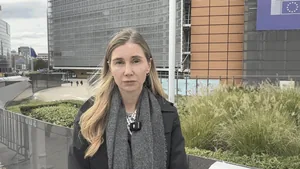
If she were prime minister, (“an eventuality I never considered in my life”), judiciary reform would be her first priority: “Without justice investors will not come to Georgia, without justice business cannot thrive, without justice you will never be hired based on merit.”
Despite of all the tensions and violence, Bokuchava has no regrets about giving up an international career to return to Georgia: “It doesn’t matter if you are living abroad as a self-made millionaire or a nanny, every person who was born in Georgia eventually wants to come back. Regardless of the opportunities that were presented to me in other countries, I always wanted to come back, especially after 2009, when I saw that thanks to Sakashvili’s vision, meritocracy and work ethics started to be valued again. A well-functioning, modern state was possibly his biggest legacy. No wonder such vision of Georgia clashed with Putin’s, who wants us to be a failed state with no prospects of ever joining NATO nor the European Union.”
Sakashvili’s vision of a modern, democratic Georgian state clashed with Putin’s, who wants us to be a failed state with no prospects of ever joining NATO nor the European Union
Bokuchava has no doubts about what the EU should do to help Georgia’s democracy: “Europe needs to be more decisive, we need targeted sanctions against oligarchs, I already said this in many conversations with European leaders, especially within the EPP. The European Parliament adopted the suspension of visas for Georgian diplomats, but its implementation has been left to each single member states, which makes it ineffective. In fact, GD already adapted its narrative, saying that the EU doesn’t want Georgia to join.”

The EU has already a lot on its plate with the enlargement in the Western Balkans and Ukraine, so the snobbish attitude of the Georgian government makes things easier. In this respect, Bokuchava points out that the member state veto power undermines the EU efficiency. “Ivanishvili knew that, that’s why he invited Orbán many times in Tbilisi and paid him many visits (and maybe not only those). Fortunately, that specific obstacle has been removed by the Hungarian people.”
I still have time for one last question: what would you say to those Georgians who are afraid of taking sides in the confrontation between Russia and the West? “I would tell them to believe in our country and I’d quote Mzia Amaghlobeli (a prominent Georgian journalist sentenced to two years of jail for slapping a police officer during a confrontation, ed) იბრძოლეთ, სანამ გვიანი არ არის, which roughly translates to ’Fight now before it’s too late’.”
To the Georgians who are afraid of taking sides I’d say: “Fight now before it’s too late”
We chat for a few more minutes and she shares her contacts for follow up questions, mentioning that her phone is tapped and her family under surveillance. Her husband, who was recently kidnapped, picks her up at the restaurant where we met. I admire their courage and it’s somehow relieving to see how people can adapt to the most difficult situations while maintaining faith in the cause and determination.
4. Zurab Japaridze
Faith and determination are also features that distinguish Zurab Japaridze, the next (former-)MP on my list of contacts. Unfortunately, just the day before the interview, he was hit by a car while riding a motor scooter and suffered a concussion and minor memory loss. Because of that, I only spoke to him on the phone, but the conversation still felt quite real.
Zurab and his Girchi party are well known in Georgia for their memorable political stunts, usually designed to expose what they considered absurd laws by obeying them in equally absurd ways: on (Georgian) New Year’s Eve 2016, they publicly planted cannabis seeds in their party office to challenge Georgia’s drug laws; in 2017, they founded the tongue-in-cheek ”Biblical Freedom” church and began ordaining young men as priests, exploiting a legal exemption to save thousands of them from compulsory (and useless) military service. In 2018 Girchi activists mooned Russian forces across the occupation line in South Ossetia. In 2019, they briefly declared part of their headquarters a brothel called ”Pioneer” to protest laws against facilitating prostitution.
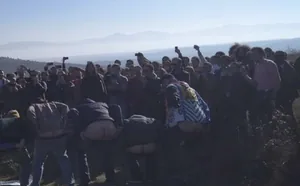
At the same time, reading Japaridze’s biography, he comes across as a remarkably serious guy: he has a degree in medicine and one in public affairs, he is married with three children, he was a professor at the Free University of Tbilisi and at the Georgian Institute of Public Affairs. And he was briefly the UNM’s executive secretary. “When I was elected I was probably the only person in the party on which the different factions could find a consensus, because I was not aligned with any of them and they knew I was a trustworthy person. But the position was mostly symbolic; the party was in a difficult situation and Saakashvili was still running it. After a couple of months I decided to resign and make my own party, it was a better way to use my time.”
Is Japaridze a responsible person who has mastered the art of political communication, or a funny guy who knows how to disguise himself as a serious one? As it turns out, he is a bit of both, and his conception of communication perfectly adapts to DG MEME: “If you do some crazy stuff what you get, at minimum, is people’s attention. And then you have a short time span when you can do some educational work, where you can explain why you’re doing that crazy stuff.”

A great example of this is the cannabis issue: Georgia still has very draconian Soviet-type drug laws, people end up in jail just for smoking marijuana. “Many people smoke it but it’s something nobody would admit in public, so we still accept those harsh rules”, a friend of mine told me. So Japaridze attracted the public’s attention to this issue: “We planted marijuana seeds publicly online and we risked up to twenty years and we wanted to see if they’d arrest 87 people. And they didn’t, also because the whole country was watching online. And we explained that it’s not fair to be jailed for marijuana.”
Another sensitive issue is prostitution: it is not criminalized in Georgia, but you can get arrested if you own a place where prostitution takes place. “Of course the police doesn’t go after Marriott or Radisson, but they go after the small hotels. So we decided to open a brothel in our office, in the same building with the British embassy and the US consular services.”
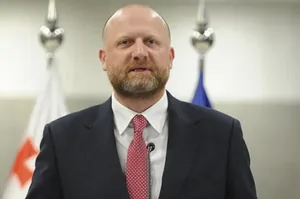
Creating a religion to avoid the draft is my personal favorite: surprisingly for a country that is partially occupied by Russia, the regular army is not a place where you learn anything useful. ”The government is afraid people could use military skills against them, so young men end up wasting one year of their life patrolling empty buildings”, told me a friend.
And Girchi quickly found a solution: “There is a rule that allows priests to avoid the draft, so we created our own religion. It was not easy, we initially applied as a traditional religion, but they refused to accept our cult saying that it was not real. Then we picked a Christian denomination and they had to accept it. And marijuana, of course, became ’our sacred herb’. We ordained about forty new priests per day.”
If you do some crazy stuff what you get is people’s attention. And then you have a short time span when you can explain why you’re doing that crazy stuff
The Christian, Evangelical, Protestant Biblical Freedom Church of Georgia even has their own oath: “I believe that individual human rights are the most important and that personal freedom cannot be restricted. Those who believe otherwise are irresponsible bureaucrats, homophobes, xenophobes and other bullies who bully and use violence onto others in accordance with their wicked worldview.”
This matches perfectly the ultra libertarian party ideology: “With your body you should be allowed to do whatever you want. The state should have no rights to get involved in our lives without our permission.”
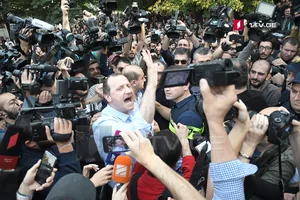
The creative methods of the party are not surprising: “It’s a group effort, we meet together, sometimes sober, sometimes drunk, sometimes high, and we think which actions could bring us the highest attention with the lowest budget. We got arrested many times, we received huge fines, but we had also a lot of fun.”
But all good things, eventually, come to an end: “These stunts worked for a couple of years, we gained the support of many young people. But now we had to stop because in this regime people get arrested for a post on Facebook so we would be really risking too much.”
As a young man, Japaridze has never been interested in politics: “I was curious about the human being, I liked philosophy and I studied medicine. After the end of the Soviet Union, when Georgian economy collapsed, I was working in one of the state agencies and I was witnessing immense corruption on a daily basis. I was going crazy, a country cannot function like that. And that was the first time I asked myself how a state could be organized without corruption. So I started reading about economics and social studies and then I was spending days and nights discussing with people online on Facebook, which was, and still is, the most popular social media in Georgia. Eventually a newly founded online magazine, Tabula, offered me to write a weekly economy column for them. And from there I was debating with politicians and I entered their world.”
Despite ending his membership in UNM, Japaridze has positive memories of those days: “There are a few people from UNM I am still friends with, one of them is Tina, she was a good chairman of the party. The problems she had are not related to her, anybody in that position would have problems, because the party was created to revolve around the personality of Saakashvili. For anyone else but him it would be very difficult to be a successful party leader. And I realized this already many years ago.”
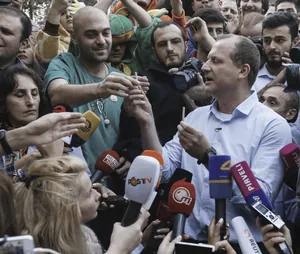
The inability of the oppositions to find another common, charismatic leader favors the regime: “The main problem is the lack of trust among political opposition and also within the civil society. We need to solve this problem and find a way to be united. When the Soviet Union collapsed we also had many different anti-Soviet movements, but they all wanted the same thing, independence. And even if they accused each other of being KGB agents, in the end, they managed to achieve their goal. I think we just have to continue the fight and one day we will prevail.”
Japaridze also has positive memories about Saakashvili: “He was for sure the most popular politician of our times and I really supported him and his policies, especially the economics one. He brought Georgia back to his feet, creating a period of dignity for my country, as we were fighting against Russia. Under his leadership Georgia enjoyed some of the best years since independence.”
The UNM party was created to revolve around the personality of Saakashvili. For anyone else but him it would be very difficult to be a successful party leader
When I ask him where he was on the day of the Rose Revolution, when Saakashvili stormed the Georgian Parliament carrying a red rose and interrupting the first session of the newly elected parliament, his face opens in a big smile: “I was inside the Parliament! With two friends of mine. I still have a memento of that day: on their first day the new parliamentarians receive a copy of the Constitution and a set of rules to respect. And I took one of these envelops, because that new Parliament ceased to exist on the day we entered it.”
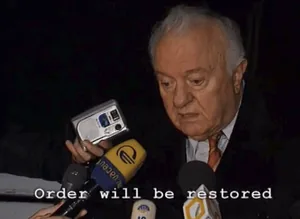
It’s unusual for somebody who was not involved in politics to be in the centre of a revolution: “Many regular citizens were joining the protest, even the soldiers who were supposed to guard the Parliament. They just moved away when we arrived, I remember they were wearing some old Soviet uniforms, because they had our same problems.”
Even his father joined in. ”He came to the protests but he was making fun of them: ’How can you believe we can remove Shevardnadze? He has been ruling for fifty years’ His generation didn’t believe that a change was possible, because they were born and raised under his direct or indirect rule. I think getting rid of him was the greatest success of my generation.”
I think getting rid of Shevardnadze was the greatest success of my generation
Nevertheless, Japaridze does not idolize Saakashvili: “Of course he is also a controversial figure and he made some mistakes, especially with failing to create independent judiciary and not being able to talk to Georgian businesses. And it is always easy to judge with hindsight, but if we consider he was in power of a country with so much corruption, no functioning institutions, no electricity, no gas, no water, what he achieved was remarkable. And now he is a political prisoner.”
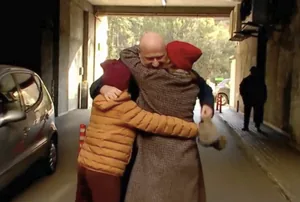
Japaridze was also a political prisoner, and he might become one again: in June 2025, he was jailed for refusing to follow a summons to an investigative commission and he spent seven months in prison. “It was solitary confinement, I was alone in the cell, a small one, the diagonal measured just eight steps. I had one table and a small metal bed. All you can do is reading and walking back and forth. If I stopped walking I would start having lots of problems, so I was walking all the time, 16-18 km per day. I go every day to the gym and I really missed my exercises in that cell. The two main problems are not seeing your family and personal hygiene. You can make one private call a week otherwise you can only communicate via lawyers; Shower is allowed only twice a week. And sometimes there was no water, so I was going 10-12 days without shower.”
I was in solitary confinement for seven months, I was alone in the cell, a small one, the diagonal measured just eight steps.
Images from the Count of Monte Cristo and London’s The Star Rover flash through my mind: “In prison you keep thinking: ’How did I end up here? Why did I end up here?’ You keep challenging your life choices and I realised I would have not done anything different. The most difficult thing, especially when you know you didn’t do anything bad, is trying not to get crazy and avoid becoming a bad person thinking about the injustice you’re living through. It’s a very difficult experience, but you have lots of time to think about a lot of stuff. When you are a politician you don’t have any time at all.”
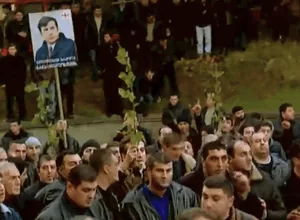
Japaridze’s determination allowed him to endure such a terrible ordeal. “The regime we live in is based on lies, the control on people and information is like during the Soviet Union. So the fight against the system is individual, single people that decide to stand up to their lies. If more people start fighting them back it will collapse. Maybe they hope to force me to leave the country, but they will not succeed. This country is my country, I have lived only in this country, I never studied abroad and I never spent too much time far from Georgia. And I will keep fighting for it, I can’t be different. And I have no doubts we will manage, this country existed for thousands of years and we had our ups and downs.”
6. Government officials
I will not pretend to be neutral on this issue: Russia must be stopped as soon as possible because it represents a constant threat to anyone who believes states can be something better than mafia associations. I also have little doubt that Russia heavily influences the current Georgian government, much as it has influenced the Hungarian one.
Having said that, out of a desire to hear a different opinion, I did try to reach out to government officials but I was not particularly successful. Perhaps I did not try hard enough, or perhaps they simply have little interest in explaining why they are repressing freedom of speech in their own country. In the end, all I managed was a conversation with Tamar, a mid-ranking official at the Ministry of Foreign Affairs and a friend of a friend.
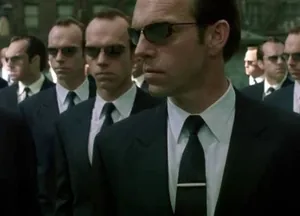
We meet for a coffee just outside the ministry; the conversation was respectful and relaxed. She confirmed that meritocracy within the government is virtually non-existent, and that knowing someone above you is worth more than an impressive CV. But she warned me against ”believing the opposition’s narrative”, because ”they always twist things in their favour so that they look innocent”.
When I pressed her for something more specific, she remained vague, citing state television as her main source of information. I then asked whether she believed the government could influence television and other news outlets. She dismissed the idea: “They always talk about the opposition.” I followed up on the Foreign Agent Law, but she offered no convincing argument in its defence, only a rather revealing: “The government has to protect itself.”
Perhaps I should have looked for a more skilful spokesperson…
7. The Magic of Khevsureti
The idea that the lovely people I have met over the last few days are all risking five to ten years of prison simply for expressing their opinions weighs on me as I walk through the beautiful streets of Avlabari, the Armenian district of Tbilisi. My friend Sesil offers me a welcome escape from my worries: “I spoke with Shukia. We could visit her place over the weekend, if you want.”
Shukia is originally from Khevsureti, one of Georgia’s most remote areas (just to give you an idea, the gravel road we drove along does not yet appear on Google Maps) and she had romantically described her village during a dinner in Innsbruck: “Nature is still alive there; to reach my home there is no road, you have to ride a horse and cross a river. We are Christians, but our religion is much older than that; we have holy shrines, sacred forests, and mountain peaks nobody is allowed to reach.”
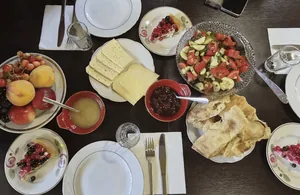
The image of a Caucasian Shangri-La formed in my mind, and I was very disappointed that my schedule had not allowed me to visit the area during my trip in 2016. So I am delighted by Shukia’s invitation and to discover that, in the last ten years, her village has become accessible by road. ”At least up there in the mountains I won’t hear about Georgian politics,” I optimistically think to myself.
“With the foreign agent law, my little business can’t get EU funds and all the local projects have stopped because of that. And we need those funds if we want to protect the environment from exploitation. There are now some government grants but they are not really designed to help us…”, Shukia tells me when I ask about her Bed and Breakfast activity; I feel that the politically charged dark cloud of Tbilisi has followed me into the jeep. Despite her successful studies in biology and a well-paid job in Tbilisi, Shukia decided to return to T., her hometown, mostly to focus on making cheese, her real passion. ”I just couldn’t live in the big city. I miss my mountains so much when I am not here. In winter it’s hard; sometimes we are completely isolated for days, but it is so peaceful and beautiful.”
Because of the foreign agent law, the local projects can’t get access to EU funds. There are now some government grants but they are not really designed to help us.
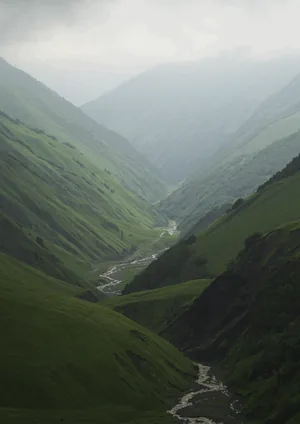
It is indeed very beautiful, even if the weather during those days does not really cooperate: it is the end of July, but it is cold and raining. The highest peaks are visible only for a few seconds before fog and clouds cover them again. The wrath of the elements does not discourage Sesil, who decides to drive us farther, as far as the well-preserved fortifications of Shatili and Mutso, near the border with the Chechen Republic, a federal subject of Russia. I try to spot Russian soldiers on the other side, feeling as if I were inside The Tartar Steppe.
The Russian threat feels even stronger here in the mountains, and the Khevsur people, known since the Middle Ages as fierce warriors, have still not forgiven the Soviets for forcing many of them to abandon their villages in the 1950s. The proximity to Chechnya, and the atrocities committed there by the Russians, also serve as a warning to all the neighbouring regions. ”Fortunately, our people managed to return to their ancestral homes and reconnect with our forests. We know how to shoot, we know how to ride and we know these mountains very well. If the Russians really want to come, we are ready.”
Shukia quotes a moving couplet from the epic Aluda Ketelauri (1888) by Vazha-Pshavela. Its remarkably modern plot fascinates me: Aluda, a respected Khevsur warrior from Shatili, kills Mutsal, a formidable enemy from the Muslim Kists. According to Khevsur custom, he is supposed to cut off his dead enemy’s right hand as a trophy. But during the fight Aluda comes to respect Mutsal’s courage, and he refuses to do so, recognising that a brave enemy can be a worthy human being even if he is a Kist. His refusal shocks the other Khevsurs and alienates him from the community; when he later goes so far as to make a religious sacrifice for Mutsal’s soul, they finally expel him.
“ცუდას რად უნდა მტერობა,
კარგია მუდამ მტრიანი!”
“Evil needs no enemies;
A good man always has enemies!”
“Yes, our laws can be quite strict” Shukia comments as she serves us her signature homemade cheese. My brief stay in Khevsureti comes to an end, and Sesil gives me a lift to Chinti, where we part ways. From there, I hitchhike on towards the mountains around Kazbegi for a weekend of trekking.
Flying out of Tbilisi, with the magnificent Caucasus range stretching below me, I feel a little like C-3PO escaping a Rebel ship under attack by the evil Empire: “That’s funny, the damage doesn’t look as bad from out here.”

A huge thank you to Gabrielius for the Georgian contacts; to Nino and Irina for their company and guidance; and to Sesil, Shukia, Ele and Ia, for making my short trip to Georgia so special.
Comments
Leave your comment